
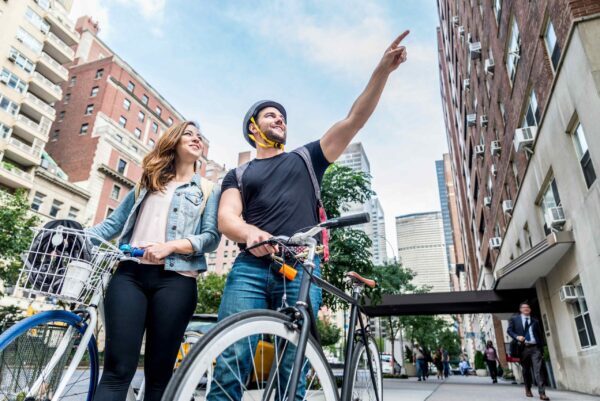
Renting a bicycle for a day or several hours in Toronto is quite possible thanks to a special rental system. The popularity of two-wheeled vehicles, which are included in the list of “green transport,” has led to a gradual increase in consumer demand. This became the main reason for launching a special bicycle rental system in Toronto. This overview provides a detailed examination of this system’s history, features, and rental conditions for visitors and city residents.
Toronto’s Bicycle Rental System: What It Is and How It Works
Bike Share Toronto is a system that was successfully launched in May 2011 under the name BIXI Toronto. This system was considered an integral part of the Bixi brand, which is a public bicycle rental system actively operating in Montreal. Both systems were successfully launched by Public Bike System Company (PBSC) – an international company specialising in equipment supply for two-wheeled transport rental systems. This company’s tasks include developing not only rental systems but also various components and software.
Three years later (in 2014), BIXI Toronto came under the management of Toronto Parking Authority – TPA (a municipal company providing parking services). The main reason for this “change of power” was financial problems in PBSC company. After transitioning under municipal company management, the system was renamed Bike Share Toronto (this is the name by which all city residents now know it well).
Initially, the system covered approximately 200 km² (80 square miles) of the city, with bicycle stations located in the following areas:
- Finch Avenue;
- Rouge National Urban Park;
- Lake Ontario;
- Long Branch.
Users are offered the opportunity to choose any membership plan – annual or monthly. After this, they can successfully rent a bicycle at the nearest station. All necessary additional costs related to rental are charged after the first 30 minutes of transport use.
In 2020, there was a large-scale expansion of the bike-sharing system, leading to an increase in the number of stations (to 625) and bicycles (to 6,850). By 2023, the system included 756 stations and offered 8,970 bicycles, including 1,815 electric bicycles. According to 2023 statistics, the system served approximately 5.7 million trips, and by 2024, this number increased to 7 million. Plans for 2025 include expanding the system’s coverage to the entire city.
History of Bike Share Toronto Launch
In 2011, the BIXI Toronto system began operating under PBSC company management. At the project’s launch, clients were offered 1,000 rental bicycles and 80 stations concentrated in downtown Toronto. This was where city visitors and residents could rent the necessary number of two-wheeled vehicles.
In 2013, PBSC company was supposed to repay a loan received from the city municipality – $3.9 million out of the received $4.5 million. However, the company’s financial position did not allow full loan coverage, so bankruptcy had to be declared. The loan was covered by the city, which used funds obtained from the automated public toilet programme. As a result, the system came under municipal management, and in April 2014, the system was taken under TPA control, receiving its name – Bike Share Toronto. Consequently, Alta Bicycle Share (now better known as Motivate LLC) became the new system operator.
By 2015, there were plans to expand the system by 22 stations for the Pan American Games, but this decision was soon cancelled. The first stations operated on a hybrid platform:
- 8D company was responsible for software.
- PBSC company handled equipment supply.
Over time, the company decided to create its own hardware and software system. This resulted in completely abandoning integration of system components with other suppliers’ components. However, this decision brought substantial financial costs, as existing stations had to be modernised or completely replaced to meet new operating conditions.
Bicycle Rental Payment: Pricing Policy
For maximum client convenience, the company has installed a special payment kiosk at each bicycle station for service payment. This can be done using a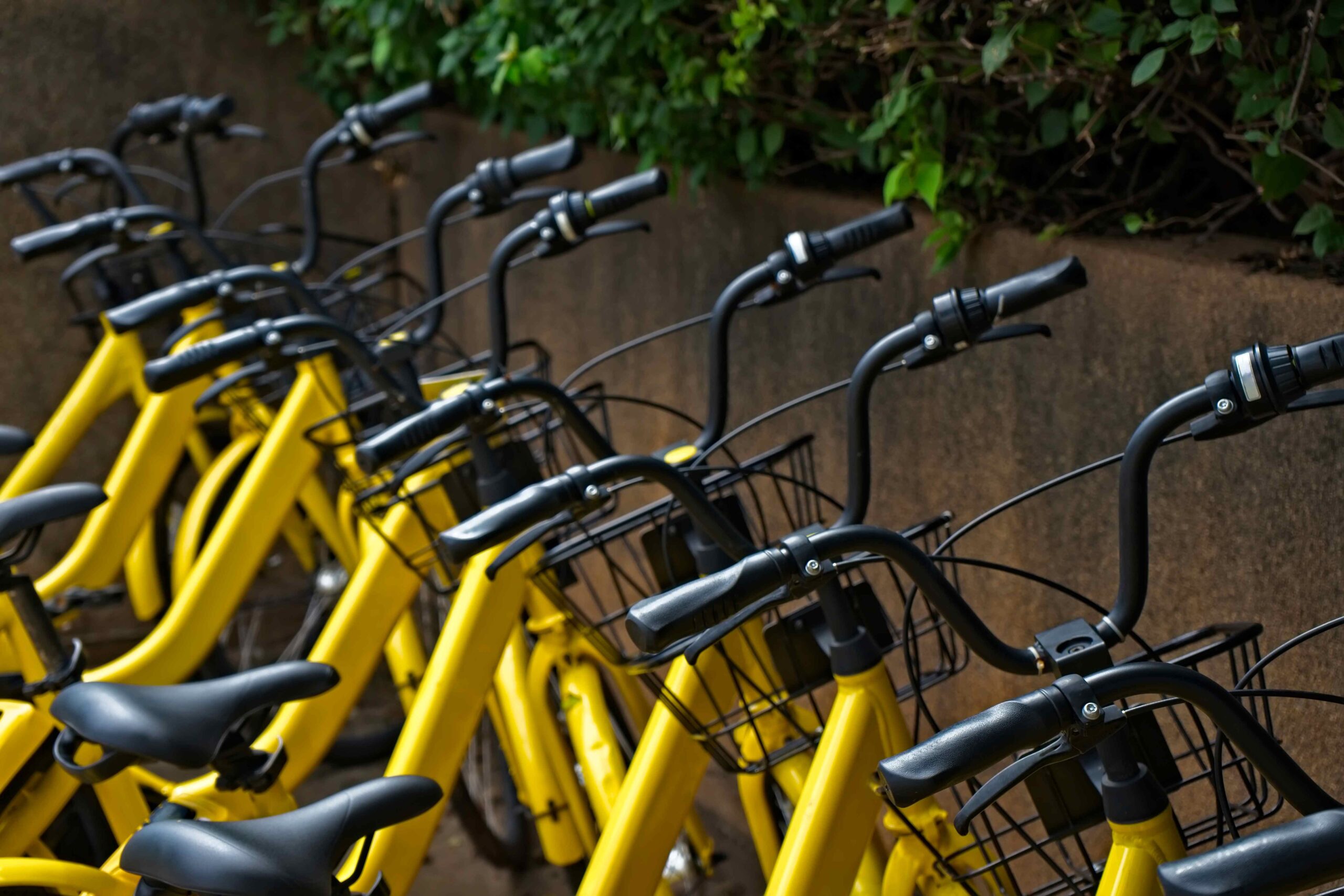 key card, mobile website version, or the system’s mobile application.
When declining membership or subscription, an unlock fee must be paid for transport access. The unlock cost is $1. After this, you can rent a bicycle and pay for its usage time.
Rental costs depend on bicycle type:
- $0.12 per minute for regular, classic bicycles;
- $0.20 per minute for electric bicycles.
If desired, company clients can purchase a 24-hour pass costing $15: this allows unlimited trips within 90 minutes for standard bicycles.
Additionally, annual membership options are available. Two main levels are offered:
- Annual membership providing unlimited 30-minute trips. Cost: $105 per year.
- Annual membership providing unlimited 45-minute trips. Cost: $120 per year.
Both levels guarantee unlimited trips exclusively on standard, classic bicycles. For electric bicycles, when purchasing any membership, trip costs are halved to $0.10 per minute.
If the specified rental duration limit is exceeded, fines and fees calculated at regular rates will be charged. These are the rates applicable to electric bicycle and classic bicycle riders without membership purchase. To reset all accrued limits, parking rules must be followed, and bicycles must be properly disconnected after return.
Payment discounts are available for students, university teachers, and registered company employees. They receive 20% off future membership fees. Those receiving subsidies from Toronto Community Housing Corporation (TCHC) can use the “30” annual plan at a reduced cost of $5.